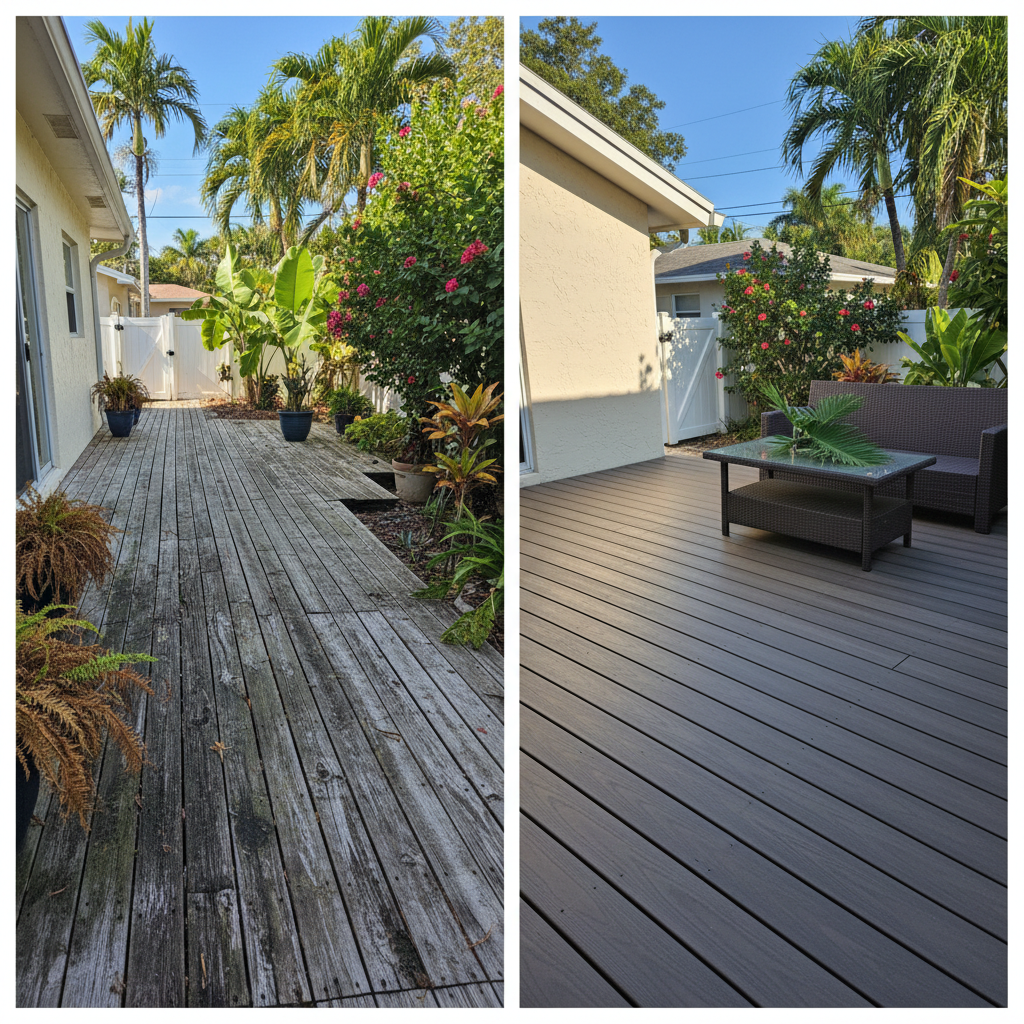
You're looking at composite decking for your Fort Lauderdale home, and that's smart. It's a great choice for our climate, but not all composite is created equal. When I talk to folks, one of the biggest decisions they face is between capped and uncapped composite boards. Let's break down what that means for you.
What's the Big Deal with "Capped" Anyway?
Alright, so imagine a regular composite board. It's a mix of wood fibers and plastic, pressed together. That's your basic, or "uncapped," composite. It's durable, sure, but it's still got some exposed wood elements. Now, a "capped" composite board is like that same core, but it's got an extra layer, kind of like a protective shell, on all sides or at least the top and edges. This cap is usually made of a tougher, more weather-resistant polymer.
Think of it like this: your phone has a screen protector, right? That's what the cap is for your deck board. It's an added layer of defense against the elements. And down here in South Florida, we've got some serious elements to defend against.
Durability: The Fort Lauderdale Test
This is where capped composite really shines, especially for us. Our sun is brutal. I've seen uncapped decks fade and show wear faster than you'd believe. That UV radiation just beats them down. The cap on a composite board acts as a shield, protecting the core from those harsh rays. It helps maintain the color and integrity of the board for much longer.
Then there's the humidity and rain. Uncapped boards, because they have exposed wood fibers, can still absorb a little moisture. Not like wood, mind you, but enough that over time, you might see some mildew or staining if you're not on top of cleaning. Capped boards are much more resistant to moisture absorption. That cap means water just beads up and rolls off, making them less prone to mold and mildew, which is a huge plus when you're dealing with our year-round humidity and those sudden afternoon downpours.
I've also seen capped boards stand up better to scratches and dings. If you've got kids, pets, or just move furniture around a lot, that extra layer of protection really pays off. It's tougher than the composite core underneath.
Maintenance: Less Work, More Enjoyment
Nobody wants to spend their weekends scrubbing a deck when they could be out on the water or enjoying their backyard. This is another area where capped composite is a clear winner. Because of that protective shell, they're much easier to clean. A quick wash with soap and water, maybe a soft brush, and you're usually good to go. Stains, dirt, and even things like spilled BBQ sauce don't penetrate the cap as easily.
Uncapped boards, while still low maintenance compared to wood, can be a bit more finicky. They might require a bit more effort to remove stubborn stains, and you might need to use specific composite deck cleaners to avoid damaging the surface. With capped boards, you're looking at minimal effort to keep them looking great, which is exactly what you want when your deck is right next to your pool or canal.
Appearance: Keeping it Sharp
When you first install a deck, both capped and uncapped composite can look fantastic. The difference comes over time. As I mentioned, uncapped boards can fade. They might also show water spots or stains more readily, which can dull their appearance. Capped boards, with their UV protection, hold their color much better. They're designed to resist fading and keep that fresh look for years.
Manufacturers of capped composite also offer a wider range of colors and realistic wood grain patterns. The capping technology allows for more intricate designs and richer, deeper colors that stay true. So, if you're aiming for a specific aesthetic that lasts, capped is usually the way to go.
Cost: The Upfront Investment
Alright, let's talk money. Capped composite boards are generally going to cost you more upfront than uncapped ones. That extra protective layer, the advanced manufacturing process, it all adds up. You might be looking at 15-30% more per linear foot, depending on the brand and specific product line.
Now, I know that sounds like a chunk of change. But here's what I tell folks: think about the long game. What you save in upfront costs with uncapped, you might end up spending later on extra cleaning, specialized products, or even earlier replacement if the deck doesn't hold up as well. With capped composite, you're investing in superior durability and significantly lower long-term maintenance. For a deck that's going to be exposed to Fort Lauderdale's sun, salt air, and tropical downpours year after year, that investment usually pays off big time.
My Recommendation for Fort Lauderdale Homeowners
Look, I've built a lot of decks in this town, from the waterfront homes in Las Olas to the family-friendly spots in Victoria Park. And based on what I've seen, for almost every homeowner here, capped composite decking is the smarter choice. The benefits in terms of durability, fade resistance, and low maintenance far outweigh the initial higher cost.
You're building a deck to enjoy, not to worry about. With capped composite, you'll spend less time cleaning and maintaining, and more time relaxing on a beautiful deck that holds up against everything our South Florida climate throws at it. When we build decks at Aim High Decks, we always lean towards solutions that give you the best value and performance in the long run, and capped composite fits that bill perfectly for our area.